Why would I not suffer?
Published on: 02/10/2026
A Christian perspective on embracing suffering as part of faith.
Why would I not suffer?
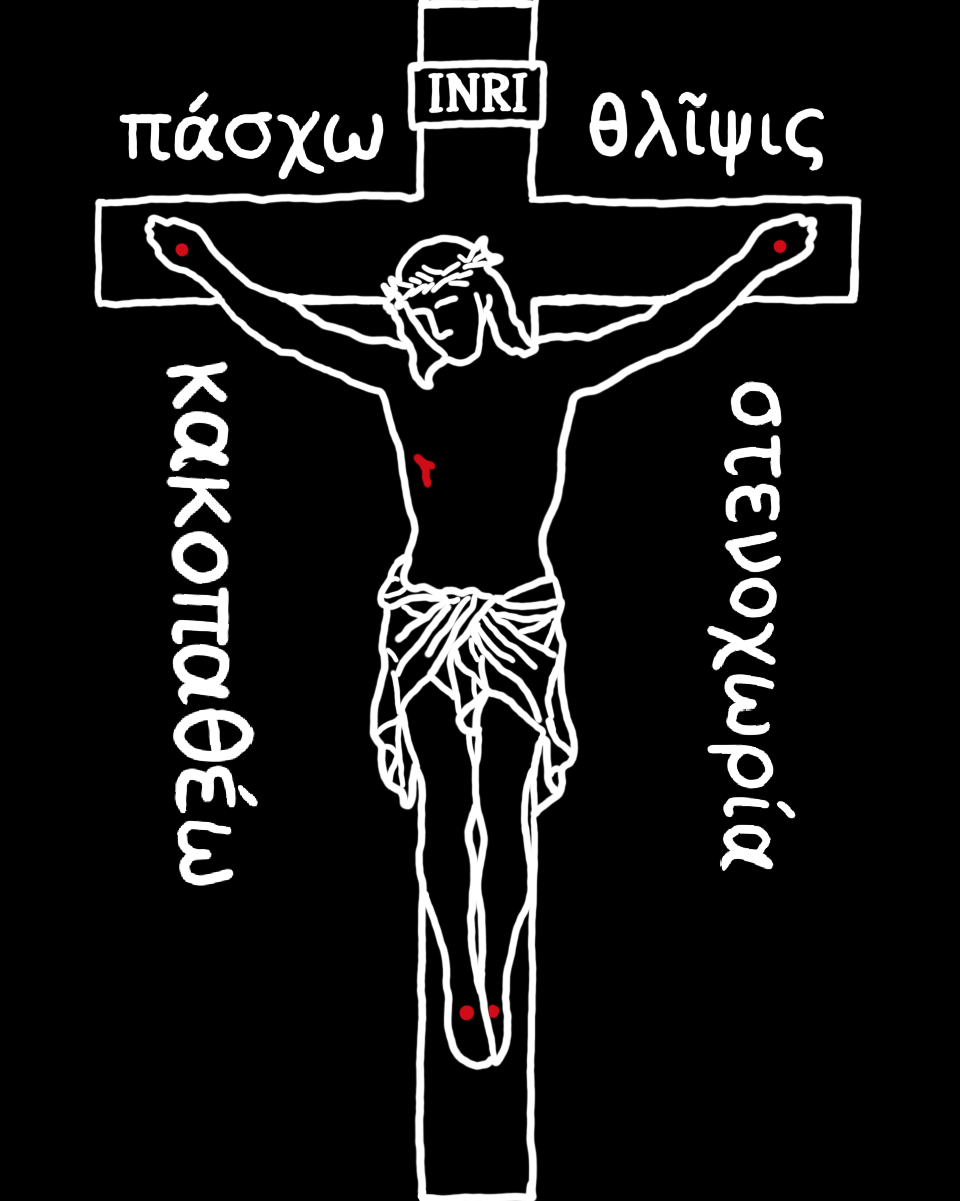
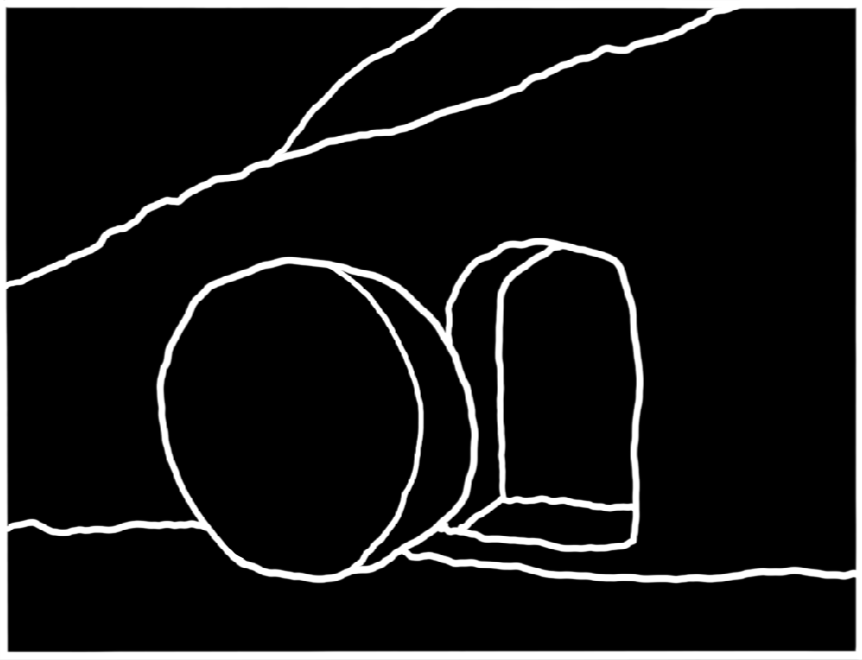
This question has been on my mind lately, so much so its inspired some art that I've attached below.
It's not that I believe that, in some pessimistic, sadistic, or masochistic view
that suffering is hopeless, gratifying, or good. Contrarily, I view suffering as the
consequence of separation from God. It isn't even implicitly good.
When God created us, it wasn't even in His original design. God
didn't intend for us to suffer.
If suffering is not good, then why must I suffer? There are
many who would say,
It's not necessary that you suffer.
Suffering is a product of your worldview.
Sin isn't real; it's an arbitrary assignment of evil based on archaic precepts.
I imagine there are a handful or more of other reasons that we
could explain away the reality of suffering, whitewash it into
comfort zones of the mind, or even ignore it entirely.
Believe me, I've tried to ignore my suffering many times throughout my life. I've tried to pleasure it away.
I've tried (unwittingly) insomnia, binge-eating, alcohol, hyper-caffeination to
then fix the insomnia, and some the combination of all of the above.
I realize now why people decide to live those lifestyles on repeat. Here's a hint for you:
It's much easier to reach for comfort than it is to fix the root case.
That's how the cycle works. You already know the pattern. You've
lived it. The bar, the bottle, the screen, the binge, the purchase,
the scroll, the swipe — whatever your fix is. You hit it, and for
a moment, the noise quiets down, if you're lucky. Then you wake up the next morning
and the silence is deafening.
So what do you do? You go back. You bring people with you this
time, because misery doesn't just love company — it requires it.
You need witnesses. Not to your joy, but to the performance of it.
We're having a great time, right? This is fun, isn't it?... right?
You scan the room. You're looking for someone to nod. Someone
to agree that this is working. And here's the tragic, ironic part —
so is everyone else. Every single person in that room is doing
the exact same thing you are: looking for someone to validate
the lie they already know isn't true.
You know it's not working. You knew before you showed up. You
knew when you grabbed your keys. You knew when you told yourself
this time will be different. It's never different. You keep
pouring from the same empty cup and then wonder why you're still thirsty.
It sucks admitting that a fulfilling life is built on top of discomfort.
It's so much more fun to focus on the easy things; defer the hard things
for later. Does that mean suffering is prioritizing the things that we
keep deferring?
I can't prescribe a singular definition to what suffering is. It would
be selfish of me to do so. Suffering for me looks like avoiding the things
that I know would be good for me:
- Exercise
- Healthy eating
- Waking up early
- Going to bed early
- Reading more books
- Learning something new
- Reading my Bible more
I'm being incredibly transparent with you. These are the things that
I consistently find myself procrastinating on. Have you taken
stock lately of the things that you're deferring?
Conversely, here are the things that I'm excelling at prioritizing:
- Playing video games
- Doom scrolling on my phone
- Eating processed foods and copious amounts of sugar
- Not drinking enough water
- Being sedentary
Does my list look like yours?
What's interesting is that every time I prioritize the
things in that defer list, I always end up feeling accomplished,
feeling aligned with what God designed for my body, mind, and spirit,
and feeling recharged.
Suffering is a universal truth only validated by the extent
and lengths that people will go to invalidate, ignore, whitewash,
and defer it. The daily repetitions of things that should
fix the disease only add onto it.
I look to the example of Christ who suffered. He suffered in ways that
I simply cannot. Suffering as a Christian acknowledges the presence of
suffering, but does not view it as hopeless. Contrarily, suffering enlightens us
to the hope of the future. Suffering aligns us to the righteousness of Christ.
If Christ suffered, why wouldn't we? I love framing it this way because it makes me
feel close to Christ.
| Human Experience of Suffering | Suffering That Finds You | Suffering You Choose |
|---|---|---|
| Anxiety and inner turmoil | Depression, existential dread, feeling like life has no meaning | Meditation, therapy, sitting with uncomfortable emotions rather than numbing |
| Betrayal | A friend or partner breaks your trust, someone you counted on sells you out | Choosing to be vulnerable again, extending trust despite past wounds, __forgiveness__ |
| Abandonment | Loneliness, isolation, facing hard things alone | Solitude, stepping away from distraction and noise to know yourself, and find closeness with your Heavenly Father |
| Being let down by people close to you | Those who should have your back disappoint you or stay silent | Showing up consistently even when no one notices or reciprocates |
| False accusation | Your reputation is damaged, you're misunderstood, motives questioned | Speaking truth when it's costly, refusing to spin or manipulate |
| Rejection by your own community | Family, colleagues, or friends exclude you for being different | Choosing integrity over belonging, staying true to your values |
| Physical pain | Illness, injury, chronic pain, aging, disability | Exercise, disciplined eating, pushing your body even in discomfort |
| Humiliation | Public failure, being mocked, shame exposed | Embracing humility, accepting feedback, letting go of image management |
| Bearing burdens visibly | Struggling in public, others seeing your mess | Serving others at personal cost, helping without recognition |
| Injustice | Systems fail you, power is abused, there's no recourse | Submitting to process even when it's broken, trusting that fairness will come, even if it's on the other side of this life |
| Deprivation | Poverty, lack, unmet needs, wanting what you can't have | Fasting, minimalism, living with less than you could, delaying gratification |
| Unanswered questions | Silence when you need answers, uncertainty, not knowing why | Sitting with ambiguity, continuing to show up without guarantees |
| Temptation to quit | Pressure to compromise, take shortcuts, abandon your principles | Self-control, saying no to what you want now for what you want most |
| Forgiving those who hurt you | Absorbing the cost of someone else's wrong without revenge | Generosity, giving without expecting return, releasing resentment |
| Mortality | Grief, loss, facing your own death | Letting go of control, accepting limitation, making peace with finitude |
| Waiting in obscurity | Feeling unseen, stuck, like nothing is happening | Rest, patience, trusting the process during seasons of hiddenness |
Christ-like suffering is acknowledging that the complex range of adversity in
life exists. It's choosing to align your mind, body, and spirit with the
choices that reflect the righteousness of Christ, not selling your soul
to alcohol, substance, food, addiction, sexual immorality, or any combination
thereof, or making idols.
The main thing that differentiates my response to suffering today in
comparison with that of the past is that I now embrace it. When I embrace
suffering as the necessary consequence of living in a broken world, I can
then look forward to a time when it will not be so. I can do that because
I trust God's promises.
But rejoice insofar as you share Christ’s sufferings, that you may also rejoice and be glad when his glory is revealed.
Suffering is not something to be avoided. It unifies you with Christ.
It is only good inasmuch as it enlightens me to the promises of the
future so that I don't become addicted, beholden, and a slave to the
present, and so I don't make idols of the useless things in this world.
But whatever gain I had, I counted as loss for the sake of Christ. Indeed, I count everything as loss because of the surpassing worth of knowing Christ Jesus my Lord. For his sake I have suffered the loss of all things and count them as rubbish, in order that I may gain Christ and be found in him, not having a righteousness of my own that comes from the law, but that which comes through faith in Christ, the righteousness from God that depends on faith— that I may know him and the power of his resurrection, and may share his sufferings, becoming like him in his death, that by any means possible I may attain the resurrection from the dead.
If He suffered, why would I not suffer?
This entry is part of the Suffering series.
Continue Reading